
AI making us smarter or lazier
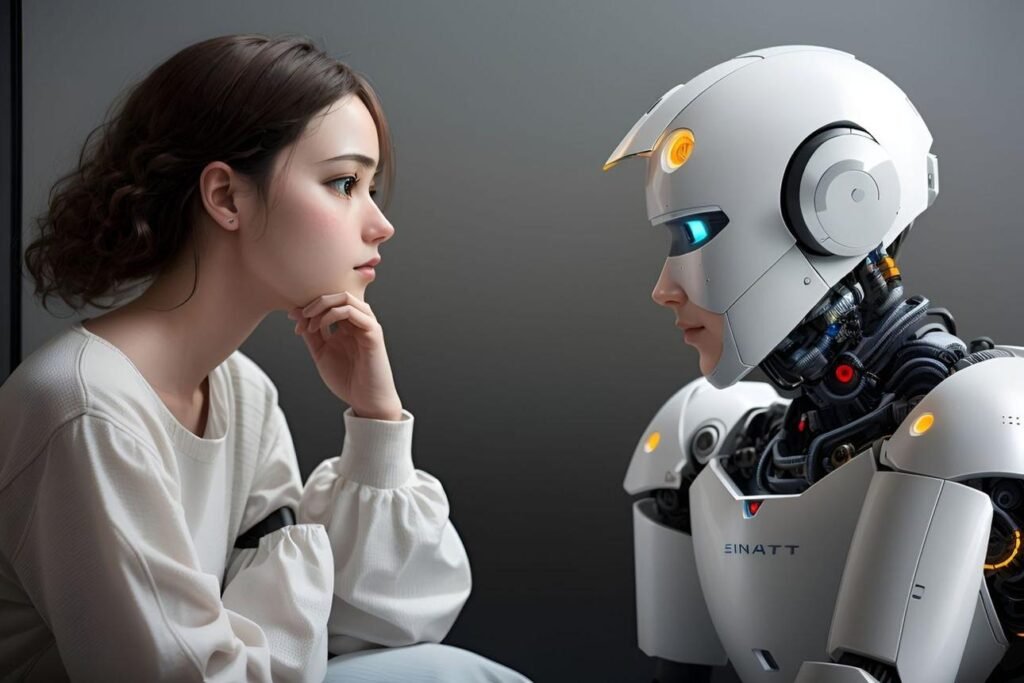
AI making us smarter or lazier
AI making us smarter or lazier ; Artificial intelligence is changing how we learn, work, solve problems, and make decisions. Although AI helps us save time and access information quickly, excessive dependence on it may affect our independent thinking and problem-solving abilities.
Is AI Making Us Smarter or Lazier in Everyday Life?

AI As A Teaching Assistant For Accelerated Skill Acquisition AI tutoring programs and apps like Khanmigo or Duolingo recognize learning patterns and adjust to your skill level. Previously this type of personalization required a personal tutor, now you can access the benefits of a personalized learning experience from your phone.
Using AI To Process Information And Make Decisions
Humans are not very skilled at spotting patterns in information, but AI excels at it. Physicians using AI to help diagnose diseases can spot health risks earlier, and financial analysts using AI to highlight investment risks can make decisions with more information than ever before. AI doesn’t make the decisions for you, it just boosts your ability to make smart ones.
How GPS And Search Engines Are Undermining Important Cognitive Skills
McGill University researchers discovered that people who regularly use GPS navigation have less active hippocampus regions than those who don’t. Similar issues arise when search engines are relied upon too heavily, as spatial reasoning and memory functions get passed off to the GPS.
The Risk Of Taking AI Outputs At Face Value
AI often hallucinates information, extrapolates beyond the available information, and has other flaws that shouldn’t be ignored. A passive approach to interacting with AI can lead to a passive approach to decision making in general, as people uncritically accept the (often false) information provided by AI.
How Automation Is Eliminating The Need To Learn New Skills
When software does things for us, we lose our ability to do them. If you’ve ever used a scheduling tool to plan your day, you may have noticed that it’s harder to plan your own daily schedule without one.
Research On AI And Human Cognitive Performance
Key Studies Showing AI Improves Problem-Solving Skills
Research has borne out the intuitive feeling that working with AI assistants has real cognitive benefits.
What Neuroscience Experts Have To Say About Long-Term Cognitive Impact
In general,reserve AI for accelerating research, but save independent critical and creative thinking for yourself.Practicing Cognitive Exercises To Prevent Underuse
Just like a muscle, the human brain requires regular exercise to maintain cognitive performance. Set aside time for unassisted problem solving, writing, and critical thinking on a regular basis.
Using AI As A Collaborator To Think Through Problems With
Instead of asking AI for answers, learn to use it as a collaborator to help think through solutions to problems.
Developing Good Cognitive Habits To Encourage Continual Growth
Teaching Our Children To Share Their Brains With AI.Kids need to learn to use AI wisely, and they need to learn how to develop good habits around it. This means understanding their limitations, recognizing when human intelligence is necessary, and practicing independent critical thinking. We need to teach kids to treat AI as a tool and not as a crutch.Human Intelligence And The Future Of AI
The Cognitive Skills Most Valuable In An Age Of AI
The skills most valuable to humans in the future will be those that cannot be easily automated, including:critical thinking,creativity,empathy,and ethics
Prompt engineering will also be an important cognitive skill in the future, as it’ll allow humans to effectively collaborate with AI.Adaptability And Curiosity Will Help You Navigate The Future.People who embrace a future of augmented intelligence will be those who display the most curiosity and adaptability. Curious people have an unquenchable thirst for knowledge and understanding. This keeps them engaged and interested in a rapidly evolving world.
For More like this Click here