
Development of a Nation: Building a Better Future for All
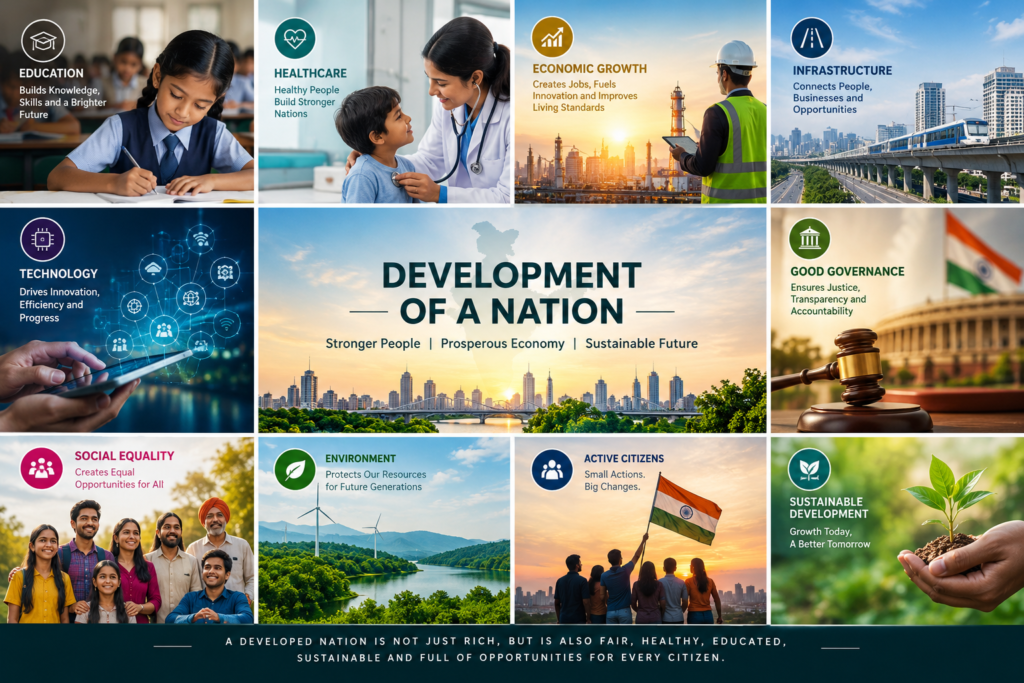
The development of a nation is not measured merely by the height of its buildings, the strength of its economy, or the advancement of its technology. True national development is reflected in the quality of life of its people, the opportunities available to every citizen, and the country’s ability to create a secure, educated, healthy, and sustainable future.A developed nation is one where progress reaches every section of society, from urban centres to rural villages, ensuring that no individual is left behind.
Income is an important indicator of national development, but it is not the only measure of progress. According to the World Bank’s research on poverty reduction, sustainable progress also requires investment in education, infrastructure, healthcare, and strong institutions. Similarly, the United Nations Sustainable Development Goals highlight the importance of reducing poverty, improving health, providing quality education, and protecting the environment. These goals show that a nation’s development should focus not only on increasing income but also on improving people’s overall quality of life.
1. Education:Foundation on Development of a Nation
Education is one of the most powerful tools for transforming a nation. It develops knowledge, critical thinking, creativity, and problem-solving skills.
A nation that invests in quality education prepares its citizens to become skilled professionals, responsible leaders, innovative entrepreneurs, and informed voters. Equal access to education, especially for disadvantaged communities, creates opportunities and reduces social inequality.
2.Development of a Nation on Economic Growth and Employment
A strong economy creates jobs, supports businesses, increases incomes, and improves living standards. Industrial development, agriculture, entrepreneurship, tourism, and technological innovation all contribute to economic progress.
However, economic growth must create meaningful opportunities for ordinary citizens. A rising national income means little if unemployment, poverty, and inequality remain widespread.
True economic development ensures that prosperity is shared across society.
3. Healthcare and Quality of Life
A healthy population is essential for a nation’s progress. Accessible hospitals, affordable medicines, preventive healthcare, clean drinking water, sanitation, and proper nutrition improve the well-being of citizens.
Investing in public health reduces suffering, strengthens productivity, and enables people to participate more effectively in the country’s development.
4. Infrastructure and Technological Advancement
Roads, railways, electricity, reliable internet connectivity, public transport, and modern communication systems connect people and markets.
Technology can improve public services, education, healthcare, agriculture, and business operations. Digital services can also make government processes more accessible and transparent.
Yet infrastructure development should be planned responsibly, with attention to affordability, accessibility, and environmental impact.
5. Good Governance and Responsible Leadership
National development requires transparent institutions, effective public services, accountability, and the rule of law.
Public funds must be used responsibly, corruption must be addressed, and government policies should serve the public interest.
Citizens also have an important role: participating in democratic processes, following the law, protecting public property, and holding institutions accountable through lawful and peaceful means.
6. Social Equality and National Unity
A nation becomes stronger when people have fair opportunities regardless of their economic background, gender, caste, religion, disability, or place of birth.
Discrimination and social division can prevent talented individuals from contributing to society. Equal opportunity, mutual respect, and access to essential services allow people to realise their potential.
Unity does not require everyone to be the same. It requires people with different identities and perspectives to work together towards shared national goals.
7. Environmental Sustainability
Development should not come at the cost of clean air, safe water, forests, biodiversity, or the well-being of future generations.
Renewable energy, responsible industrial practices, waste management, sustainable agriculture, and water conservation can support economic growth while protecting natural resources.
A truly developed nation creates progress that future generations can continue to enjoy.
8. The Role of Citizens in Nation-Building
Nation-building is not the responsibility of the government alone. Teachers educate future generations, farmers support food security, scientists advance knowledge, entrepreneurs create employment, and healthcare workers protect lives.
Every citizen contributes through honest work, responsible behaviour, respect for others, and concern for the common good.
Small actions, when practised by millions of people, can create meaningful national change.
9.Income and Other Goals
Income is an important factor in the development of a nation because it helps people fulfil their basic needs, such as food, clothing, shelter, education, and healthcare. A higher income can improve people’s standard of living and provide them with greater opportunities. However, income alone cannot measure the true development of a country. People also seek other goals, such as equal treatment, freedom, security, respect, a clean environment, and good health. For example, a person may earn a high income but still lack peace, security, or a healthy environment. Similarly, people may value job security, equal opportunities, and time with their families as much as money. Therefore, true development means achieving both economic prosperity and non-material goals that improve people’s overall quality of life.
Conclusion: Development Must Reach Everyone
The development of a nation is a continuous journey, not a destination. It requires economic strength, educated citizens, accessible healthcare, modern infrastructure, responsible governance, social justice, and environmental protection.
The real measure of progress is not simply how powerful a country becomes, but how well it enables its people to live with dignity, freedom, security, and opportunity.
A nation is truly developed when progress is not limited to a privileged few, but becomes a shared reality for all its citizens.
For more like these ; Click Here